Submitted by Brigitte Meyer and Donna Kohut, Penn Future

State leadership and policymakers have declared data centers as the “future” of Pennsylvania’s economy. Unfortunately, this short-sighted plan locks Pennsylvania into a continued dependence on dirty, unreliable fracked gas and pressures municipalities to make way for these massive energy-intensive and environmentally harmful facilities. In this article, we’ll explain the statewide push for data centers and accompanying gas-fired power plants and highlight ways that municipalities can best prepare for development—protecting themselves from lawsuits while mitigating the impacts to their communities.
Data Centers: How Big Tech is Reshaping Our Landscape
The data center industry is reshaping Pennsylvania’s natural, economic, and energy landscapes. The industry is attracted to our available open space, abundant water resources, relatively low risk of natural disasters, and state leadership’s promise of cheap, accessible gas reserves. Recently, the Team Pennsylvania Foundation (Team PA), a non-profit economic development organization co-chaired by the Governor and gas industry executives, unveiled a ten-year energy plan that establishes the AI and data center industries as the foundation for the statewide economy and fracked gas as the primary source of fuel for these facilities.
Team PA’s “Energy, Artificial Intelligence, and Data Center Roadmap” is an extensive plan outlining financial incentives, policies, and local governance tools that could be leveraged to expedite data center development across the Commonwealth. Team PA acknowledges that while this plan will boost state GDP, it will not provide significant employment opportunities for host communities, and depending on the tax breaks offered to industry, it may not even bring in meaningful tax revenue.
What’s more, this plan is underscored by the explicit bias towards the expansion and development of fracked gas infrastructure—including massive gas-fired power plants. In the past, gas was billed as the bridge to clean energy, but Team PA moved the goal post; gas is now the bridge to nuclear energy, and because new nuclear generation is always ten to fifteen years away, gas has become the bridge to nowhere.
Fracked gas favoritism is perhaps most evidenced by the Roadmap’s focus on the importance of data centers building their own sources of generation—gas-fired power plants—while promoting faster permitting times and calling for reduced regulation to facilitate their development. Consequently, communities that are unprepared for data centers may also be caught unprepared for polluting energy generation facilities, having never considered this scope or novel land use combination.
Communities and environmental organizations alike are expressing numerous concerns—from energy affordability to air pollution from gas-fired power plants. Both national and state governments are aggressively courting this new industry, and consequently, municipalities cannot afford to ignore these issues. Local governments are on the frontlines, and they must protect the safety and quality of life for host communities by addressing concerns head-on.
Why Municipalities Must Plan for Data Center Development
It is understandable that, upon hearing about the potential impacts of data centers, municipalities may be interested in banning or “zoning out” these uses. However, Pennsylvania municipalities cannot do this. The authority to enact zoning rules does not extend to “arbitrary, unnecessary, or unreasonable intermeddling with the private ownership of property,” and while it is fundamentally reasonable for a zoning ordinance to allocate different types of activities to different locations in the community, the Pennsylvania Supreme Court has held that zoning ordinances that totally prohibit a legitimate use from an entire community are almost always unconstitutionally unreasonable.
Thus, with very few exceptions, every municipality in Pennsylvania must provide for the possibility of every legitimate land use somewhere within its borders and cannot impose restrictions that make any use effectively impossible to build.
A landowner or developer may bring a legal challenge against an exclusionary ordinance (called a substantive validity challenge), and if that challenge is successful, the ordinance will be declared invalid and struck down. More importantly, the successful challenger is generally entitled to build the “excluded” use at their chosen location, regardless of how that property is zoned. This means that, if a data center developer that owns property in a residential zoning district and wins a substantive validity challenge, it must be permitted to develop its property for a data center, even if it is not compatible with the surrounding residential uses. While this does not equate to carte blanche for a developer to build whatever it wants, it does mean that the municipality no longer controls where the use can be located.
What Should Municipalities Do?
The threat of a substantive validity challenge is not just theoretical. Data center development is moving with extraordinary speed and is well-funded, placing enormous pressure on municipalities, some of whom are being caught unawares. Consequently, many municipalities that are in data center developers’ crosshairs lack zoning ordinances addressing this use. This is a recipe for validity challenges, and data center developers have already used them, or the threat of them, to intimidate municipalities across the state.
To eliminate this threat, and to regain control over data center development, municipalities must act quickly to adopt ordinances that address this use.
There are two options for a municipality. The first is through the standard process for amending a zoning ordinance. The second is to use what is known as the municipal “curative amendment” process. Under the Pennsylvania Municipalities Planning Code, the curative amendment process gives the municipality some breathing room to fix the problem without the threat of a legal challenge. To start the process, a municipality must take official action to declare its own ordinance invalid and adopt a resolution identifying the deficiencies. Then the municipality may take up to six months to adopt an amendment to “cure” the problem (hence the name “curative” amendment), during which period it does not have to entertain any substantive validity challenge based on the same ordinance defect identified in the resolution. The catch is that a municipality cannot trigger this process after a validity challenge is filed, and it is only allowed to use it once every three years. Therefore, municipalities must choose when to exercise this option wisely.
What Should Data Center Ordinances Include?
There are several things municipalities should consider when crafting an ordinance to ensure it will be effective.
Definitions
First and foremost, the municipality must decide how a “data center” will be defined for purposes of the zoning ordinance. When doing this, it is useful to remember that the purpose of a zoning ordinance definition is not to provide an encyclopedic description of a use, but to identify the essential description of a use, but to identify the essential characteristics that distinguish that use from other uses so that it is clear which zoning regulations apply to it.
Other issues that municipalities should consider when crafting definitions include:
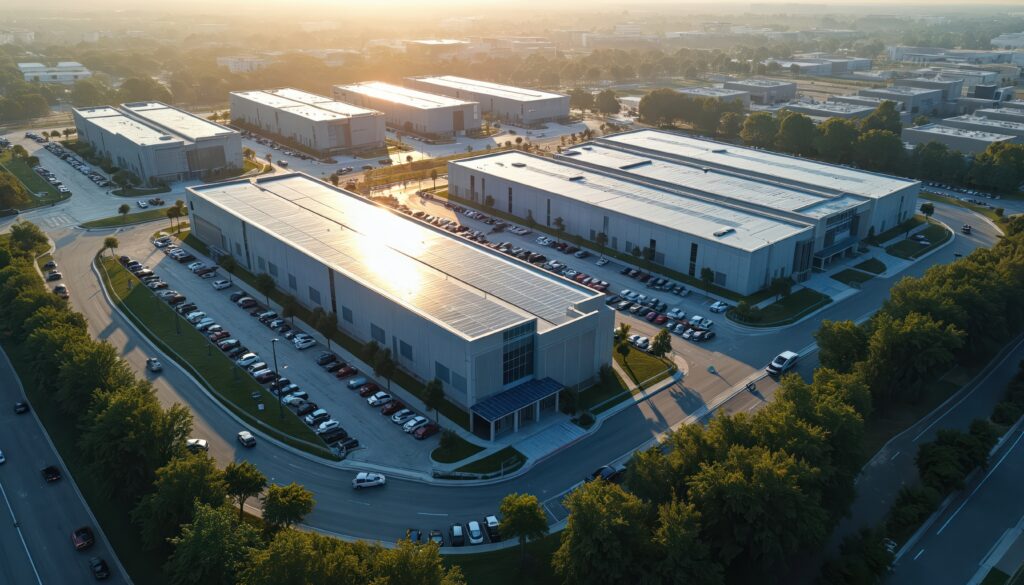
- Whether facilities that include multiple data center buildings warrant unique regulations such that a “data center campus” or similar use should be separately defined;
- Whether similar uses like cryptocurrency (bitcoin) mining should be included within the definition of a data center. Although these two uses are substantially different from a computing perspective, the characteristics that are relevant to zoning (size, water and septic needs, traffic and noise generated, etc.) may be similar enough that they can be considered the same use for zoning purposes.
- PennFuture has developed a Model Ordinance for Data Centers that includes a helpful core definition as well as language addressing many of the important considerations set forth herein.
Power Generation
In crafting an ordinance, a municipality also must consider whether common secondary components of a data center like electrical substations, cooling towers, water towers, security buildings, wastewater treatment facilities, or on-site power generation facilities (whether gas, solar, wind, or nuclear) will be treated as a component of the data center or will be separately defined and regulated.
The most significant of these potential “secondary” components is power generation, which may not be secondary at all. While data centers generally prefer to connect to and draw power from the grid, where this is not feasible, some may look to generate power on-site. Data centers require very large amounts of power, so the potential exists for sizeable power generation facilities if this is to be used as the data center’s main power source. Because Pennsylvania decision-makers are actively promoting and smoothing the way for developing gas-fired power plants, we’re primarily seeing this as the leading on-site power generation. Given that power generation facilities bring a separate set of land use concerns that may not fully align with the concerns related to a data center use, municipalities would be best served by drafting separate ordinance provisions governing these uses rather than treating them as simply accessories to a data center.
Location
There is no one-size-fits-all approach to deciding where to permit data centers—each municipality must take into consideration numerous factors such as available land, the character of different areas of their community, and environmental constraints.
In addition, municipalities would do well to take into consideration the fact that developers choose a location for a data center based upon access to power infrastructure. Data centers can use hundreds of megawatts of electricity, and they typically look for properties that will allow them to easily connect to high-voltage power lines to get that power.
It is unlikely that existing zoning districts are organized around electricity infrastructure, so sites with appropriate power access may be located in only a portion of a certain base district or scattered among several. An overlay district may be a useful tool to address this use.
An overlay district is a zoning district that layers on top of all or part of one or more of a municipality’s underlying zoning districts and imposes different zoning rules in the area it covers. The overlay district rules may replace some or all of the rules applicable in the underlying district, supplement those rules, or create an optional, alternative set of rules that a landowner may choose to develop under.
By employing an overlay district, a municipality can target these sites with access to power—or the subset of them that also has additional suitable characteristics— for data center development without having to include inappropriate sites simply because they are in the same underlying zoning district. Overlay districts may also allow municipalities to keep data centers away from sensitive residential or environmental areas within their boundaries.
Type of Zoning Approval
Requiring conditional use or special exception approval, rather than allowing the use by right, is likely the best choice for data centers in most locations due to the use’s potential for creating significant community and environmental impacts and the relative newness and unfamiliarity of the industry. By-right or permitted uses can be reviewed and approved by a municipality’s zoning officer without the involvement of any other local body or the public. If a proposal complies with the zoning ordinance, the zoning officer must approve it as-is, without additional conditions.
Conditional uses and special exceptions require a public hearing to determine whether the proposed use complies with the zoning ordinance. At this hearing, the applicant must present evidence of compliance, and certain members of the public are entitled to question an applicant’s witnesses and to introduce their own evidence with respect to the proposal. The decision-making body may impose additional conditions to approval that go beyond the requirements in the zoning ordinance if evidence presented at the hearing gives them reason to believe that such conditions are necessary to protect the public health, safety, and welfare.
Additional Standards
An effective data center ordinance will address the top-level concerns with most data centers including power usage, water consumption, and noise.
Power Usage
Data centers’ power consumption and its effect on other customers’ electricity rates is among most Pennsylvanians’ top concerns when it comes to data centers. However, this is a concern that municipalities have very little power to address, especially when the power is not generated on-site. Regulation of the electric grid and energy prices occurs at the state level or higher, and municipalities are prohibited from regulating when and where an electricity user is permitted to connect to the grid, how much energy it uses, or the cost of electricity.
Water Withdrawals
The main use of water in data centers is for cooling servers and other digital infrastructure to prevent overheating and loss of function. How much water any given data center uses will depend on the size of the facility, the type of equipment it houses (for example, AI processors generate more heat than non-AI processors), the type of cooling system employed, and climate. Water usage can range from amounts comparable to a small office building to many hundreds of thousands or even millions of gallons per day. It is worth noting that this is only considering the impacts from the data center cooling itself. On-site fracked gas power generation could more than double the impact.
Consequently, municipalities should consider ordinance provisions that require developers to demonstrate that these withdrawals will not adversely impact existing wells, surface waters, or groundwater resources. Where the data center will be served by a public water utility, this can likely be accomplished by requiring the developer to provide a “will-serve” letter from the utility verifying that it can supply enough water to meet the data center’s requirements. Where a data center intends to use non-public water sources, municipalities should require that developers submit a study providing information about the anticipated water withdrawals, how that need will be met, and what impact, if any, the water withdrawals will have on nearby water resources.
Municipalities should also be aware of state and other regulations relating to water withdrawals, and, in some cases, the lack thereof. Municipalities should be aware that DEP does not regulate private wells in the way one might think. Once a well is drilled, DEP does not issue permits, impose limits on how much water can be withdrawn, or monitor impacts on surrounding wells or surface waters. Therefore, municipalities cannot assume that issues with water withdrawals will be caught and remedied by DEP. Municipalities should also be aware that water withdrawals above a certain threshold may be regulated by an interstate river basin commission, preempting local regulation.
A Path Forward for Municipalities
Municipalities may not be able to stop data center development outright, but our local government has significant authority to regulate data centers to mitigate the impact of these facilities and accompanying gas-fired power plants on local residents, the character of the community, and the environment. Utilizing the considerations outlined above, we encourage municipalities to step up and chart their own path forward for the health of their local economy and community.
Article from the February 2026 Municipal Reporter | Pennsylvania Data Centers Edition