BY Gloria J. Daudier, Senior Relationship Manager & Senior VP for Government Banking, Wells Fargo
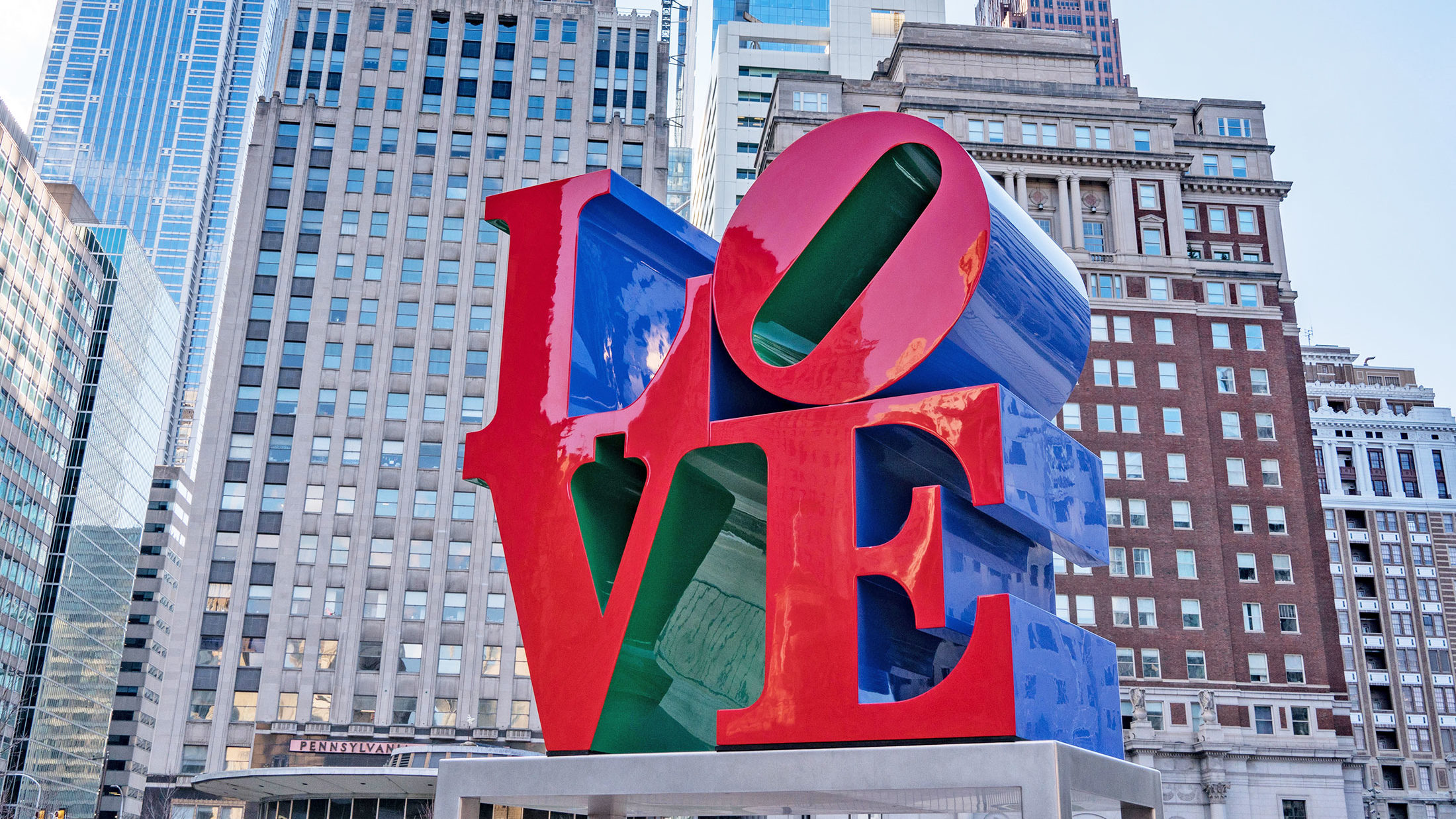
For me, thinking about public art in Pennsylvania begins and ends with the “LOVE Sculpture” in Philadelphia. I grew up with it. It’s a centerpiece of my family memories.
As a native of Philly who grew up in the mid-1980s and early 90’s in the southwest part of the city, just miles from the airport, I recall riding the SEPTA trolley on Market Street with my parents, brother and sister. I was the youngest. We would ride to City Center, walk around City Hall, and then the “LOVE Sculpture” would emerge at JKF Plaza.
In those years, crossing busy Broad Street with my family and seeing the towering red letters a dozen feet above my head, it felt like I had stumbled onto something that no one else was aware of.
Fast forward to today working in Government Banking for Wells Fargo – living in New Jersey for the last 15 years – I’ve been to the Philadelphia City Treasurer’s Office a million times. The world can be a chaotic place. Yet every time I recall memories of the “LOVE Sculpture” with my family, or see it again these days, it gives me hope.
To me, that’s the power of public art. And that’s why Philly and Pennsylvania are such hopeful places. The city and state brim with public art. In fact, in 2025, Philly was voted the best city for street art in America for the second time, and New Hope in Bucks County was named the No. 1 Small Town for Arts & Culture in the U.S.
In addition to pop artist Robert Indiana’s iconic LOVE, which he loaned to Philly in 1976 for the nation’s bicentennial, Philly brims with sculptures: the “Rocky” statue at the bottom of the stairs at the Philadelphia Museum, donated by former Philadelphian Sylvester Stallone to the city after it was created for the 1982 movie “Rocky III”; renown pop artist Keith Haring’s “We the Youth” mural at 22nd and Ellsworth; and many other public art works.
Elsewhere across Pennsylvania, public art celebrates local culture, honors historic figures, and commemorates events. In Swissvale, near Pittsburgh, sits “Carrie Deer,” a massive sculpture made from reclaimed industrial materials, at the Carrie Furnaces, a former steel mill that’s now a historic site. In Meadville, there’s PennDOT Road Sign Sculpture Garden, a 1,200-foot mural made from recycled road signs. In Scranton, there’s “The Story of Us” mural, a tribute to the sitcom “The Office.” The list goes on.
I’m proud of the active role that local government plays in promoting public art in Pennsylvania – in Lancaster, for example, where the city actively promotes public art that tells stories and enhances the city’s identity and pride.
To me, that’s what LOVE is: The power of public art here in the Keystone State to create memories for all its residents to cherish.
Article from the April 2026 Municipal Reporter | Tourism