By Susan Schrack Wood, Director of Communications, The League
In a city where history lives on every block, Mural Arts Philadelphia has transformed Philadelphia into something even more extraordinary: The Mural Capital of the World. It is an outdoor gallery with thousands of murals spanning neighborhoods from Center City to Germantown. The roots of Mural Arts Philadelphia are as compelling as the murals themselves. The program began in 1986 as part of the city’s Anti-Graffiti Network, an initiative designed to combat vandalism by redirecting graffiti writers toward constructive public art. Under the leadership of artist Jane Golden, what started as a pragmatic solution evolved into a visionary movement. Instead of erasing graffiti, the program invited graffiti writers to express themselves as artists. As they collaborated with more traditional artists, these partnerships extended to collaborations with communities allowing for the creation of murals that reflect local stories, cultures, and aspirations.
Over time, the program expanded beyond beautification. Today, Mural Arts employs hundreds of artists, engages youth and justice-impacted individuals, and produces between 50 and 100 public art projects annually. For visitors, the experience is immersive. Art is not confined to museums but woven into the daily rhythm of the city. For residents, it’s a point of pride, identity, and storytelling. And in 2026, as the nation marks its 250th anniversary, Mural Arts is once again placing Philadelphia at the center of a uniquely American cultural moment.
A City-Sized Gallery
What makes Philadelphia’s mural scene unique is its scale and accessibility. Unlike curated museum collections, these works are embedded in neighborhoods. You can find them towering above rowhouses, tucked into alleyways, or stretching across entire city blocks.
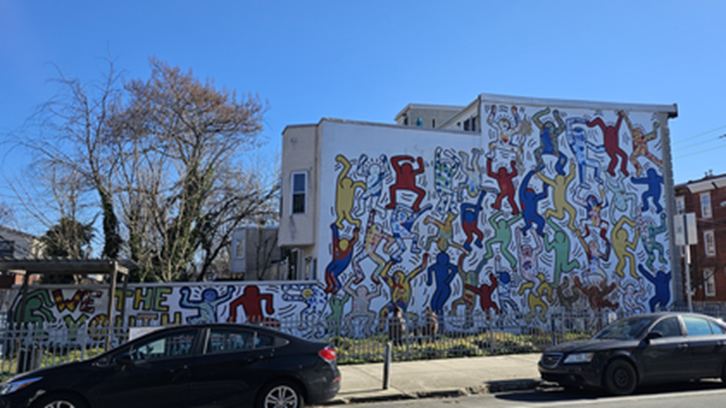
Iconic works like Keith Haring’s “We the Youth” mural was a collaboration between artists and high school students celebrating cultural identity.
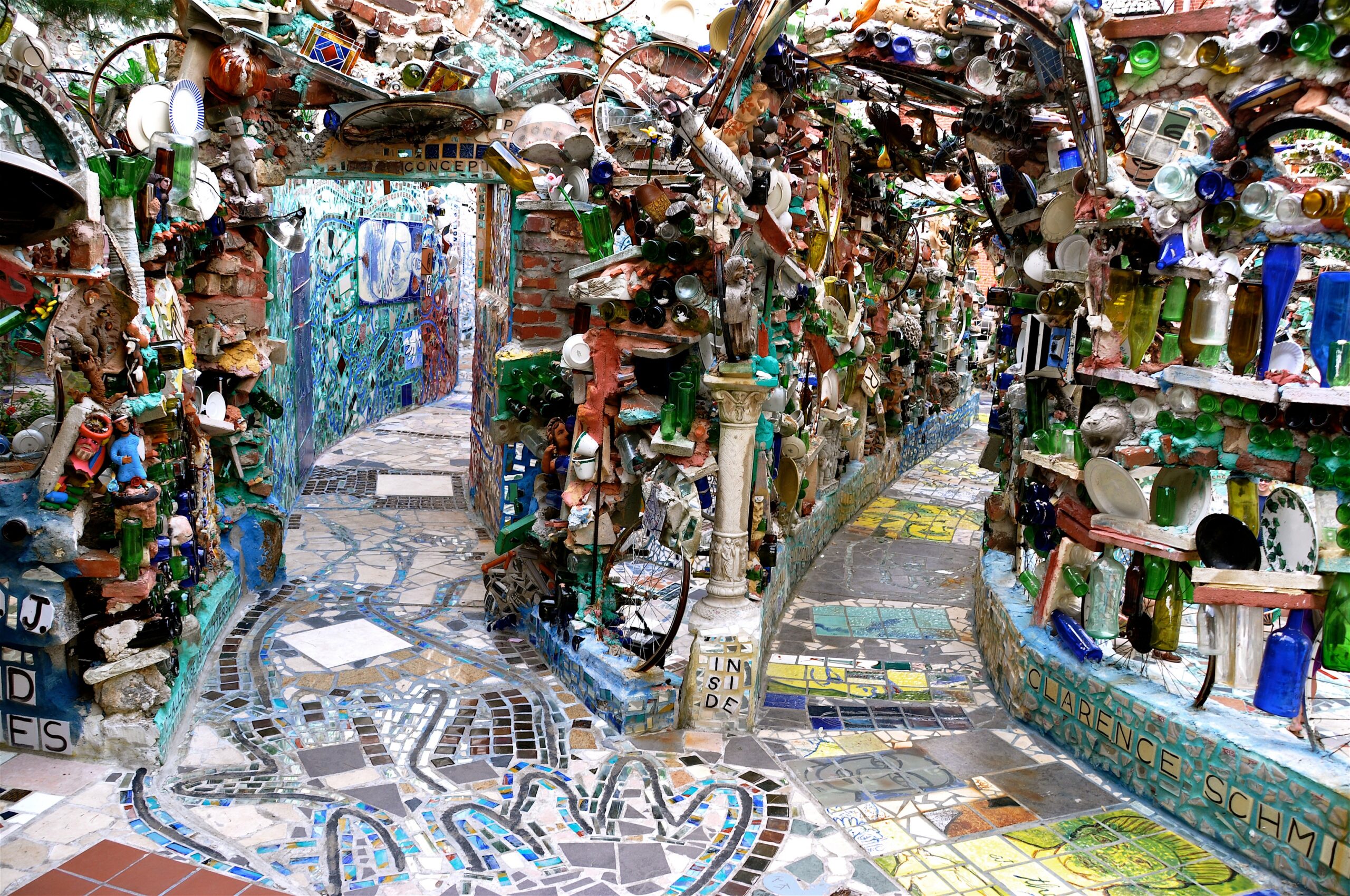
The influence extends beyond paint. Artists like Isaiah Zagar transformed South Street with immersive mosaic environments, demonstrating how public art can shape entire districts into destinations. The mosaics are inlaid with poetry, quotes, names of artists who inspired Zagar, and portraits and forms of people and animals. The gardens use a variety of materials, including bottles, bike wheels, and folk art.
The murals bring in about 15,000 visitors each year and inject almost $3 million into the local economy. For tourists it’s a chance to explore the city through art. Guided experiences like the “Mural Mile” walking tour and neighborhood-specific routes invite visitors to discover Philadelphia block by block with plentiful social media sharing experiences. The impact is tangible with cultural tourism of neighborhoods, and increased foot traffic to local businesses.
As cities across the country seek new ways to attract visitors and strengthen communities, Philadelphia offers a compelling model: invest in art, and the world will come.
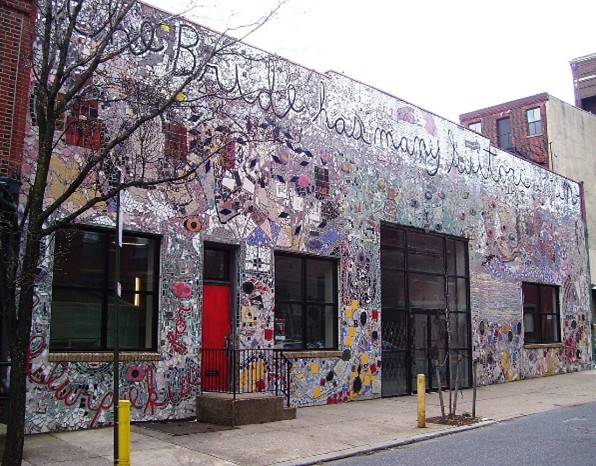
See what Mural Arts is planning for America’s 250th Celebration.
Article from the April 2026 Municipal Reporter | Tourism