How nature can defuse rage, restore trust, and renew community across Pennsylvania
By Gene Veno, Director of Government Affairs and Public Advocacy at The Susquehanna River Basin Commission
As persistent waves of violence and rage ripple through our communities, we find ourselves at a crossroads. One path leads to continued fragmentation—where conflict escalates, trust erodes, and civic life frays. The other path leads to healing—where cooperation, reflection, and shared spaces help us rediscover what it means to belong. This second path is not a dream. It is a choice. And nature can help us make it.
Green and blue spaces—parks, rivers, gardens, tree-lined streets, and reflective water features—are more than aesthetic amenities. They are psychological infrastructure, capable of calming minds, restoring relationships, and renewing civic spirit. Across Pennsylvania’s 67 counties, these spaces are proving essential to the health and vitality of our neighborhoods.
The evidence is compelling. A University of Pennsylvania study found that cleaning and greening vacant lots in Philadelphia led to a 29% reduction in gun violence, a 22% decrease in burglaries, and a 30% drop in nuisances such as noise complaints and illegal dumping. The Pennsylvania Department of Conservation and Natural Resources (DCNR) reports that outdoor recreation is strongly linked to mental well-being, with residents affirming that time in parks and forests reduces stress and improves emotional health. Economically, outdoor recreation contributes about $13.6 billion annually to Pennsylvania’s economy, and the Commonwealth ranks sixth nationally in outdoor recreation spending. These numbers confirm that nature is not just beautiful—it is practical, measurable, and transformative.

But this is not merely about beautification. It is about integration. Nature must be woven into the architecture of public life. Parks become places of learning. Gardens become sites of reconciliation. Rivers become metaphors for renewal. When natural spaces are treated as essential civic infrastructure—rather than optional amenities—they invite reflection, dialogue, and healing. They become the connective tissue of a community.
Healing also requires confronting the roots of rage and violence. That means investing in our youth—not through punitive measures, but through education, mentorship, and skill-building programs that offer hope and alternatives. It means fostering trust between law enforcement and residents through transparency, joint initiatives, and open communication. It means advocating for sensible gun safety policies and addressing the socioeconomic disparities that often fuel conflict.
Nature can be a powerful partner in these efforts. When schools, families, businesses, and local governments align around shared stewardship of natural spaces, they create a culture of care. This alignment fosters empathy, trust, and a sense of belonging—qualities essential to any thriving democracy. It also strengthens every initiative, from public safety to education to economic development. Nature is not a backdrop; it is a bridge.
Pennsylvania offers vivid examples. The Susquehanna River, one of the nation’s great waterways, provides recreational opportunities to millions—fishing, boating, hiking, and quiet reflection along its banks. Pittsburgh’s riverfront redevelopment has transformed industrial corridors into vibrant civic spaces. Lancaster’s green infrastructure projects show how stormwater management can double as community beautification. The Lackawanna River, once scarred by industrial pollution, is now a nationally recognized American Heritage River, offering trails and trout fishing that reconnect residents of Scranton and surrounding towns to their natural heritage. In Altoona and Blair County, tributaries like the Little Juniata River and Beaverdam Branch are being revitalized through conservation partnerships that blend flood mitigation with public access and recreation. From rural trails in Tioga County to urban parks in Philadelphia, nature is already proving its power to heal. The task now is to expand and align these efforts across all 67 counties.
It is important to recognize the leadership that makes these efforts possible. Governor Josh Shapiro and members of the State Governmental Committees have worked to prioritize the restoration of green and blue spaces across the Commonwealth. Their commitment underscores that nature is not a partisan issue, but a shared investment in public health, safety, and community resilience. By supporting initiatives that restore rivers, expand parks, and green our cities, state leaders are helping municipalities build the psychological infrastructure needed for a stronger Pennsylvania.
Municipalities in Pennsylvania can establish greenways and blueways by embedding them into local planning, building strong partnerships, securing funding, and managing them as civic infrastructure. Yes, budgets are tight everywhere, and that’s a challenge. Successful endeavors find ways to take advantage of existing needs – such as stormwater management requirements or other infrastructure upgrades – and leverage that work to incorporate elements of greenways and blueways.
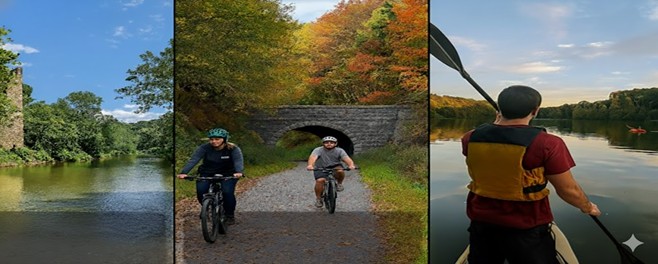
The process typically involves community visioning, corridor identification, acquisition or easements, design with green infrastructure, phased construction, and long-term stewardship. Pennsylvania offers vivid illustrations of this approach: the Brandywine Creek Greenway, spanning 24 municipalities in Chester and Delaware Counties, shows how regional collaboration and nonprofit leadership can protect riparian buffers while connecting parks and historic sites; the Path of the Flood Trail in Cambria County demonstrates how heritage and natural landscapes can be woven together, transforming the route of the 1889 Johnstown Flood into a nationally recognized recreational and cultural corridor; and the Westmoreland County Greenways & Blueway’s Network highlights how county-level planning can align multiple municipalities under a shared vision, blending environmental protection with recreation and smart growth. Together, these examples confirm that when municipalities treat greenways and blueways as civic infrastructure, they create spaces that heal communities, foster trust, and strengthen resilience.
- Brandywine Creek Greenway: A lush corridor of riparian buffers and historic sites, spanning 24 municipalities.
- Path of the Flood Trail: A heritage-rich route transformed into a vibrant recreational trail.
- Westmoreland County Greenways & Blueways Network: A county-wide vision blending smart growth, recreation, and environmental resilience.
Municipal leaders can harness this power by making greenways and blueways part of everyday planning.
The steps are straightforward:
- Listen to residents through community meetings to shape a shared vision.
- Identify corridors like riverbanks, old rail lines, or floodplains that can connect neighborhoods.
- Secure land or easements with help from land trusts and local partners.
- Design with nature in mind—using native plants, stormwater features, and safe trails.
- Build in phases, starting small to show quick results.
- Find funding through state grants, federal programs, and public-private partnerships.
- Ensure long-term care with volunteer groups and “Friends of the Greenway” organizations.
Let us move from fragmentation to harmony. Let us cultivate a culture of compassion, rooted in nature and nurtured by community. The path to a brighter future begins with a walk in the park, a moment by the water, and a shared breath beneath the trees. In these moments, we rediscover what it means to belong—not just to a place, but to each other.
As we look ahead to a new year, let us commit to building communities that heal. Let us invest in the quiet power of nature and the enduring strength of civic alignment. The public square is waiting. The trees are listening. The rivers are ready. All we need to do is begin—together.
About the Author
Gene G. Veno is a lifelong Pennsylvanian, civic advocate, and educator. A native of Scranton, he has held leadership roles including Chairman of the Lackawanna County Home Rule Commission and Vice President of the Scranton School Board. He is the author of Navigating The Corridors of Power and currently serves as Director of Government Affairs and Public Advocacy at The Susquehanna River Basin Commission.
Article from the December 2025 Municipal Reporter | Responding to Political Violence Edition