BY Susan Schrack Wood, PA Municipal League, and Kea Wilson, Streetsblog USA*
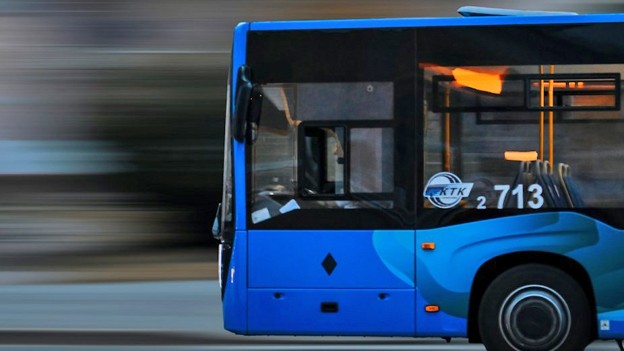
When Pittsburgh’s downtown city employees received free transit passes this August, it was part of a Pittsburgh Regional Transit strategy to increase ridership and decrease traffic congestion. The program is called the PRTner Pass Program. It lets employers, schools and apartment owners buy 31-day passes for $28 instead of the regular $97.50, as long as the passes are available to everyone in the group. The city is the eighth group to join the program. The mayor’s proposed 2026 budget set aside $275,000 to provide passes for an estimated 750 Downtown employees, which would be the largest group in the program so far. There’s no public record yet of how the program is working so far, but free bus service is not a concept limited to Pittsburgh.
New York City Mayor Zohran Mamdani has pledged to free NYC transit riders from gridlock and the farebox by making bus service free for all riders. Advocates at the Climate and Community Institute argued last spring that other cities can and should aspire to the same goal, even in an era of sharp federal transit cuts that have only escalated since their report was initially released. “When we zoomed out from New York…we started finding so many examples of smaller cities that were implementing these kinds of changes, both to speed buses up and to reduce or eliminate fares,” said John Stehlin, a professor at University of North Carolina, Greensboro and co-author of the report.
Although many of Pennsylvania’s cities offer free bus passes or looped routes for specific populations (senior citizens, students, some city employees in certain cities), Currently, no city or municipality in the Commonwealth offers free public fixed-route bus service for all general users. Could free fares for all actually be feasible?
Bus fares account for only 9% of PRT’s total revenue. That is smaller than before the pandemic, when the agency got about 21% of its revenue from fares, roughly $90 million a year. Replacing that money would still be a major undertaking, and it would mean giving up the steady income that bulk pass programs provide. PRT has spent the past two years in a squeeze over state support. In 2025 the agency was weighing service cuts and fare increases while lawmakers debated a proposal to raise transit’s share of state sales tax revenue, providing an additional $1.5 billion over five years. An agency fighting to preserve existing service has little room to give up fares.
Pennsylvania rules limit how local taxing bodies can contribute to public transit. PRT is also a county-level authority rather than a city department, so Pittsburgh couldn’t simply declare buses free. What the city can do is pay PRT on riders’ behalf, which is essentially what the employee pilot does.
What other cities have found
US transit agencies recovered just 13% of their operating expenses from ticket sales in 2024. In some communities like Olympia, Washington, agencies found that enforcing fare collection actually cost them more than the amount their riders were paying.
“A lot of places looked at the cost of collecting fares and found that the juice wasn’t worth the squeeze,” added Stehlin.
And the societal payoff for giving folks a free ride could be huge. One study cited by researchers found that ridership shoots up an average of 56 percent after fares are eliminated. Pennsylvania offers free transit to senior citizens on local fixed-route service. Allegheny County has also tested targeted discounts. Beginning in early 2023, the county gave about 14,000 people cards and split them into three roughly equal groups: no discount, half off, and unlimited free rides. The county and PRT then launched a half-fare program for SNAP recipients. PRT’s CEO explained the logic this way: half fare lets the agency help twice as many people as full fare would. That approach matches what researchers have described. A recent academic paper notes that without adequate replacement for lost revenue, fare-free transit risks degrading service, and that targeted discounts for specific groups let agencies keep revenue from riders who can pay.
Evidence from elsewhere suggests free fares do raise ridership. A recent peer-reviewed study of Kansas City, which compared it with nine similar cities, found post-policy ridership in zero-fare cities was approximately 22% higher than in cities without such policies. In Boston, ridership on three routes that dropped fares grew 35% from 2021 to 2022, while ridership on the rest of the bus system grew 15%. Analysts note that the strongest results tend to come from smaller systems. Fare-free programs work best in smaller systems and alongside frequent, reliable service.
When free fares end
The same cities that made the case for fare-free transit have also shown its limits. Kansas City ended its free-fare policy on June 1, 2026, after the program began in 2020 as the first of its kind in the country. The regular fare is now $2, up from $1.50 before the free program. KCUR reported that ridership increased, but so did expenses, and that the transit authority was dealing with major budget problems stemming from a lack of regional funding.
Kansas City is not alone. In 2023, Rhode Island and Connecticut discontinued their fare-free bus programs, and Toledo’s transit agency also brought fares back, according to a fare-equipment vendor with a commercial interest in fare collection. In Columbia, South Carolina, The COMET reverted to fares after public concerns about onboard disruptions, and Link Transit reinstated fares to sustain as much of its previous service as possible after funding shortfalls. Tucson has kept free fares for six years, but a $17 million deficit prompted the city manager to consider bringing fares back. Albuquerque’s transit deputy director said there are no plans to return to fares, arguing the city is better positioned than Kansas City because its transit system is part of the municipality, which can help offset lost fare revenue.
Improving Lives, Helping the Climate
The Climate and Community Institute says free and fast service can improve a lot of lives and remove transportation barriers. Emmett Hopkins, a researcher on the Institute’s study says, “We found stories of specific people [whose] buses had been made faster or free, and those people were just better able to stay connected to the things that they needed in their lives — whether it be housing, health care, school, work, groceries, recreation, or their loved ones.”
As Washington aims for steep federal transit cuts and transit agencies across the country follow suit, both Hopkins and Stehlin acknowledge that achieving the dream of fast and free buses nationwide won’t be easy. Still, they say it is possible with a few ambitious policies.
First, both co-authors emphasize that forward-thinking state DOTs already have the ability to “flex” capital dollars away from highways and towards transit agencies, freeing up funds to plan and build faster infrastructure like bus rapid transit.
Advocates, meanwhile, can fight for funding explicitly to support fare-free operations, like Virginia already did to eliminate fares in its capital city of Richmond — at the cost of just $5 million, or 0.4 percent of the DOT’s annual budget.
State legislatures can clear the way by abolishing outdated “minimum farebox recovery” mandates that effectively require agencies to charge for a ride, and let localities pass local bond measures, raise taxes, and pursue other revenue streams to amp up transit investment of all kinds.
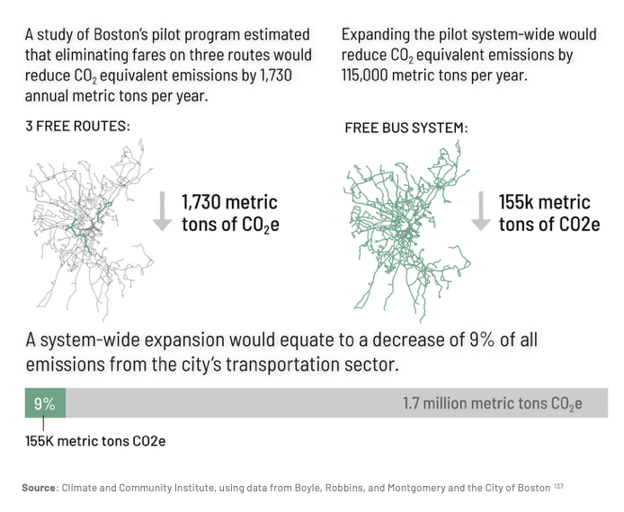
And if full-scale bus rapid transit redesigns and system-wide fare abolition aren’t in the cards, agencies can always start small with interventions like changing signal priority to benefit buses or making key downtown routes free.
“States and cities have the opportunity to give people those better options on a pretty short time scale,” added Hopkins. “That could happen in a matter of months or within a year — or, in some cases, almost immediately.”
Stehlin adds that there’s hope for faster, free buses even in communities not known for being progressive on transit — because many of them are already doing it, at least at small scale. Perhaps the best example is Birmingham, Alabama, which saw ridership rise sharply after its free, 10-mile rapid transit project, Birmingham Xpress, opened in 2022.
“One of the things that we noticed when we did the research for this report was that we’re already seeing a lot of success in these kinds of initiatives in relatively conservative states,” Stehlin said. “There are aspects of this that are more popular than a car-only agenda.”
*This article uses excerpts from Kea Wilson’s article originally appearing on Streetsblog USA and is republished with permission.
Kea Wilson is Senior Editor for Streetsblog USA. She has more than a dozen years’ experience as a writer telling emotional, urgent and actionable stories that motivate average Americans to get involved in making their cities better places.
Article from the October 2026 Municipal Reporter | Municipal Finance