By Michael Shinton, P.E., Executive Director, Horsham Land Redevelopment Authority
When per- and polyfluoroalkyl substances (PFAS)—often referred to as “forever chemicals”—were discovered in Horsham Township’s groundwater in 2014, local leaders confronted a challenge few municipalities had faced before. The issue was complex and evolving, with emerging science, uncertain regulatory standards, and significant financial implications. At stake were not only the Township’s drinking water supply, but also public confidence in local government and the long-term reliability of critical infrastructure.
More than a decade later, Horsham Township’s response has become a model of municipal resilience. Through decisive action, coordinated leadership, and partnerships across all levels of government, the Township turned a public health crisis into a long-term strategy for water system reliability, environmental remediation, and financial sustainability.
Discovery and Early Action
The first indication of a problem came in 2014, when the Horsham Water & Sewer Authority (HWSA) conducted sampling under the U.S. Environmental Protection Agency’s Third Unregulated Contaminant Monitoring Rule (UCMR3). Testing revealed the presence of PFAS compounds in several of the Township’s public water supply wells, with concentrations in two wells exceeding then-current federal health advisory levels.
In response, and in coordination with the Pennsylvania Department of Environmental Protection (PADEP) and EPA, HWSA immediately removed these wells from service and issued public notice. Further testing using more sensitive detection methods revealed a broader problem: PFAS compounds were present at measurable levels in all of the Township’s groundwater wells.
As the scope of contamination became clear, so too did its source. Investigations linked the presence of PFAS in local groundwater to decades of firefighting training activities at nearby military installations, including the former Naval Air Station Joint Reserve Base Willow Grove and the Horsham Air Guard Station.
“What began as routine testing quickly escalated into a defining moment for our community,” said William Gildea-Walker, Horsham Township Manager. “We understood early on that this would require a sustained, coordinated response across multiple levels of government.”
Escalation and Policy Direction
In 2016, the challenge intensified when the EPA lowered its health advisory level for PFAS, reducing the acceptable combined concentration of key compounds such as PFOA and PFOS to 70 parts per trillion. As a result, three more HWSA wells were removed from service to comply with the updated guidance.
Faced with growing public concern and still-evolving scientific understanding, Horsham Township elected officials and HWSA leadership made a critical policy decision. Rather than simply meeting federal or state standards, they set a local goal of reducing PFAS concentrations in the public water supply to “non-detect” levels wherever feasible.
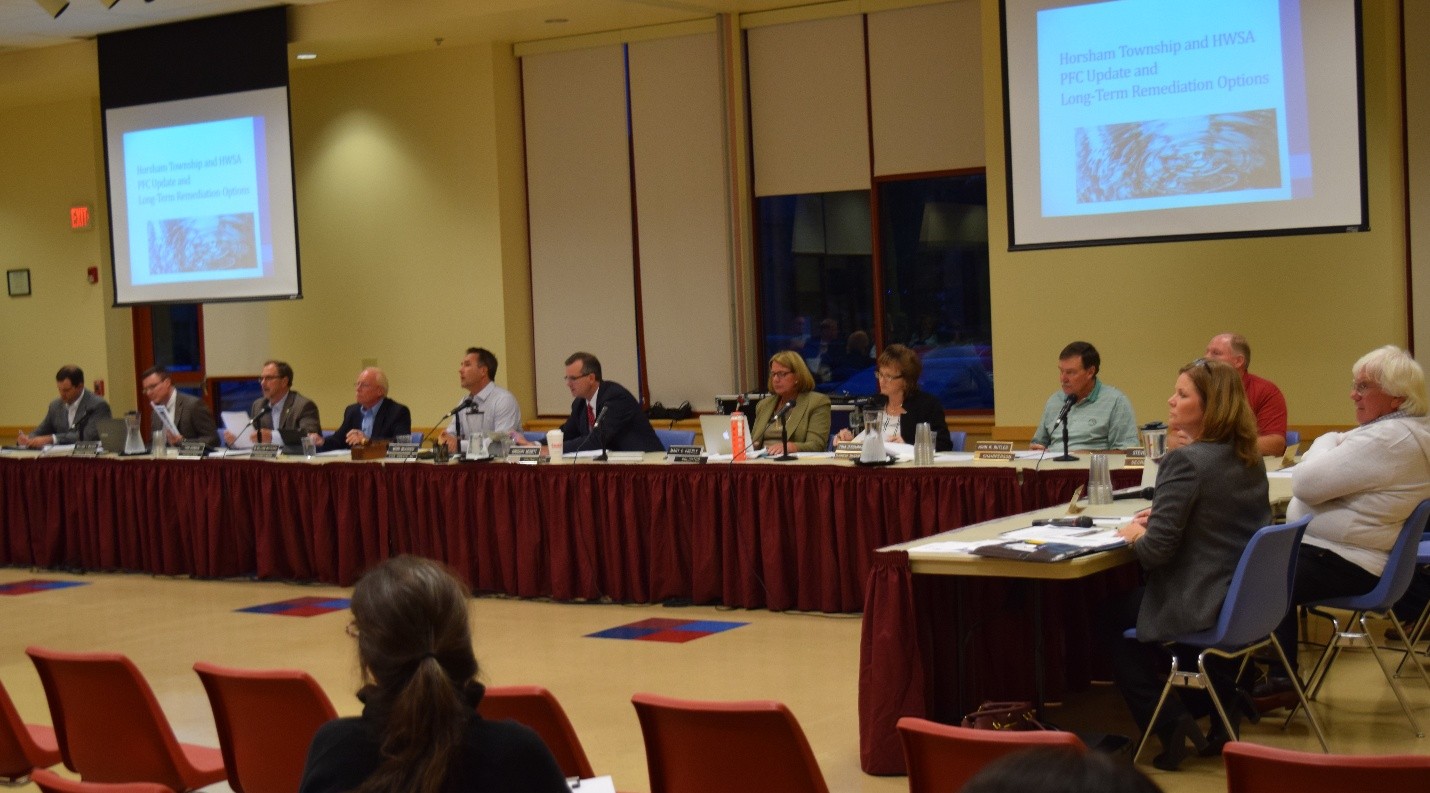
“Council made it clear that we would not settle for minimum compliance,” said Gildea-Walker. “Our residents deserved the highest level of protection we could reasonably achieve.”
Federal Partnership: The Role of the U.S. Navy
While the Township and HWSA moved quickly to protect the water supply, a lasting response required engagement with the federal agencies tied to the source of contamination—most notably the U.S. Navy. Because PFAS contamination in the region was linked to historical firefighting activities at the former Naval Air Station Joint Reserve Base Willow Grove, the Navy became a central partner in both investigation and remediation.
Early in the response, the Navy entered into cooperative agreements with the Horsham Water & Sewer Authority, providing grant funding for key actions, including the design, installation, and operation of treatment systems for impacted wells. This partnership helped offset some of the immediate infrastructure costs of restoring wells to service.
In addition to financial support, the Navy has played a long-term role in cleanup at the source of contamination. Working with the U.S. Environmental Protection Agency (EPA) and PADEP under federal Superfund and Base Realignment and Closure (BRAC) programs, the Navy has investigated groundwater contamination, evaluated remediation technologies, and implemented treatment systems at the former base.
More recently, federal efforts have included large-scale groundwater extraction and treatment, with millions of gallons of PFAS-impacted groundwater processed through ongoing remediation programs.
“The Township’s ability to respond effectively depended in part on strong coordination with our federal partners,” said Gildea-Walker. “The Navy’s participation—both in funding and in addressing the source of contamination—has been an important component of the long-term solution.”
For municipal leaders, Horsham’s experience underscores the importance of persistent engagement with federal stakeholders, particularly when the source of contamination lies beyond local jurisdiction.
Short-Term Stabilization Measures
With multiple wells taken offline, maintaining a reliable supply of safe drinking water became the Township’s immediate priority. Horsham Township and HWSA implemented an aggressive short-term stabilization plan to ensure continuity of service while longer-term solutions were developed.
Key elements of this approach included:
- Shutting down contaminated wells that exceeded advisory limits
- Maximizing use of lower-concentration sources within the system
- Increasing purchases of PFAS-free treated water from neighboring utilities
- Installing temporary treatment systems, including granular activated carbon (GAC) filters and ion exchange systems
- Implementing system-wide operational adjustments to reduce overall PFAS concentrations
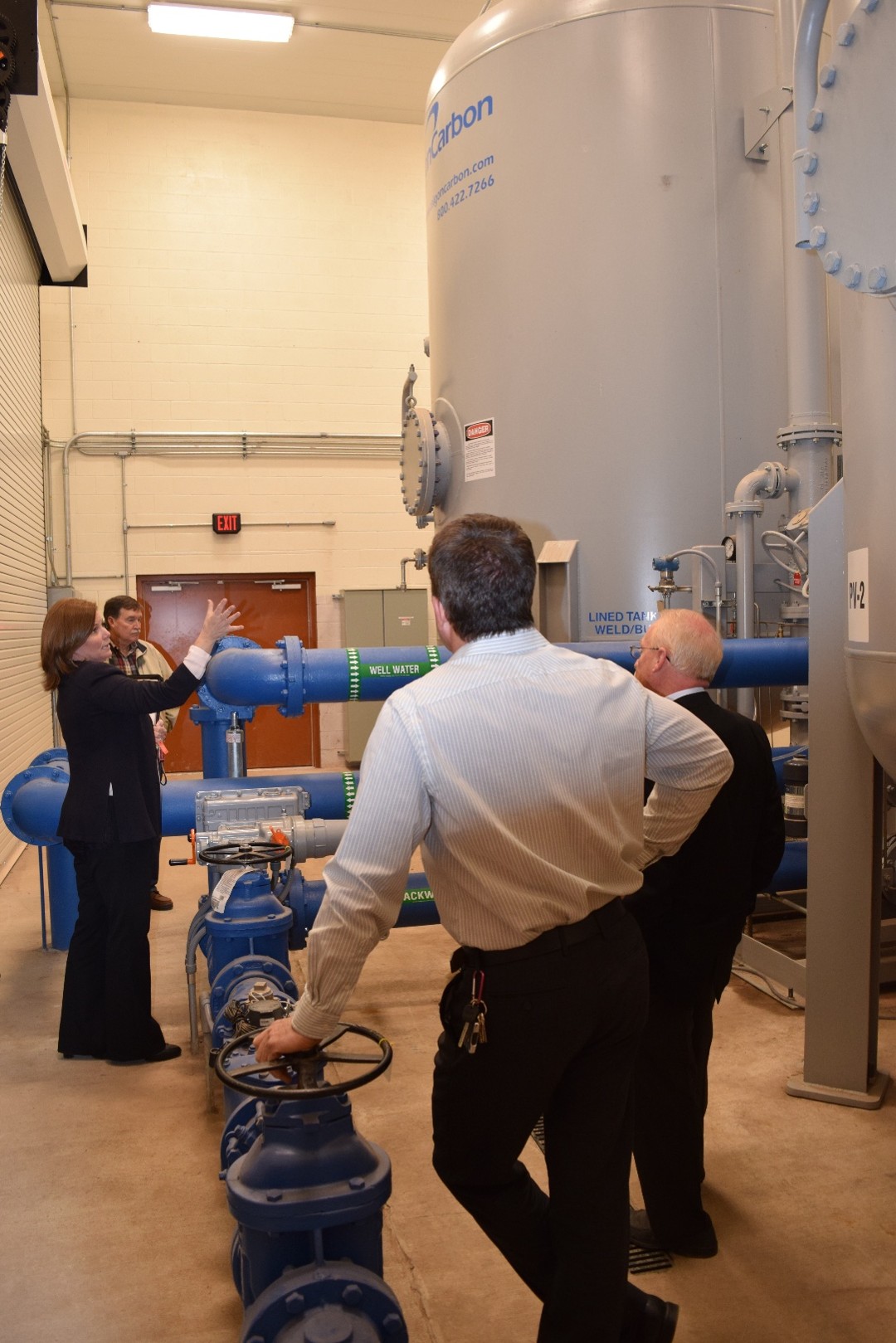
These measures allowed the Township to maintain water service while dramatically reducing systemwide PFAS levels. At the same time, they required significant financial resources, costs that were largely borne by local ratepayers through a surcharge. The annual cost of the short-term plan was estimated at approximately $1 million, underscoring the need for a sustainable funding strategy.
“We were balancing two realities: the urgency of protecting public health and the financial burden placed on our customers,” said Jack Butler, HWSA Board Chairperson. “That tension drove much of our decision-making in the early years.”
State Leadership and Legislative Innovation
As local costs mounted, the need for external funding and policy solutions became increasingly apparent. Former State Representative Todd Stephens, whose district included Horsham, emerged as a leading advocate for affected communities.
Stephens worked to secure state funding to offset the immediate financial burden on residents, including grants to eliminate or reduce PFAS-related surcharges on water bills. In 2016, for example, $10 million in state funding was directed to Horsham and neighboring municipalities to support water treatment efforts and provide relief to ratepayers.
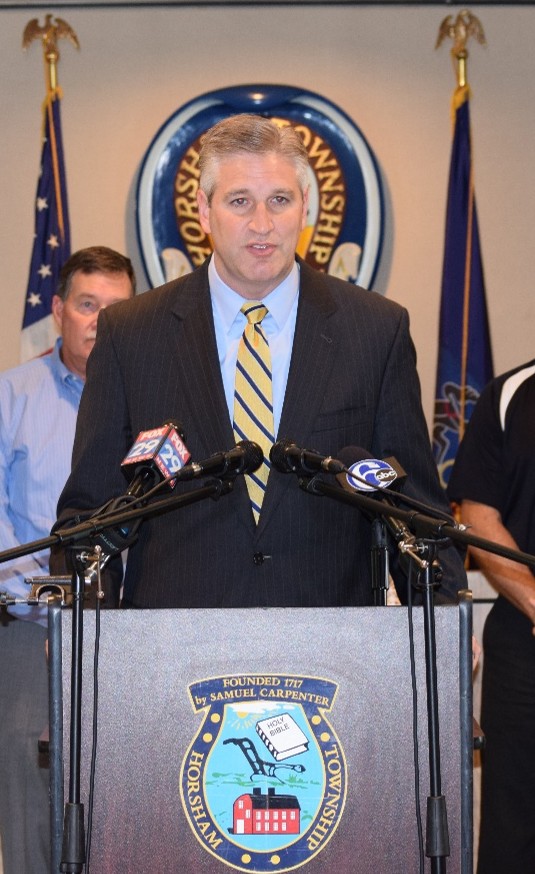
However, Stephens and other local leaders recognized that one-time funding allocations would not be sufficient to address the long-term costs of remediation. In response, Stephens introduced legislation to create a dedicated, sustainable funding mechanism tied to the source of contamination.
That effort resulted in the passage of Act 101 of 2019, a landmark law that established an innovative framework for funding PFAS remediation in communities impacted by former military installations.
The Creation of MIRIA
Act 101 authorized the creation of the Military Installation Remediation and Infrastructure Authority (MIRIA), a municipal authority established to support cleanup and infrastructure improvements in PFAS-affected communities.
Under the law, certain state tax revenues generated within designated redevelopment zones—primarily associated with the former Willow Grove base—are redirected to MIRIA. This provides a dedicated funding stream that can be used for a range of purposes, including:
- Reimbursement of PFAS remediation costs incurred by water providers and municipalities
- Financial relief for ratepayers who previously paid surcharges
- Installation and operation of treatment systems
- Extension of public water service to residents with contaminated private wells
- Infrastructure improvements and economic development projects tied to redevelopment efforts
Crucially, Act 101 addressed a core issue faced by many municipalities: the mismatch between the source of contamination and the entity responsible for paying for cleanup.
“Act 101 was about fairness as much as it was about infrastructure,” said Todd Stephens, Former State Representative and MIRIA Board Chairperson. “Our residents should not bear the full cost of contamination caused by activities beyond their control.”
Since its inception, MIRIA has generated tens of millions of dollars to support water system improvements and remediation, as well as transportation improvements and redevelopment planning in Horsham and surrounding communities. Recent grant cycles have continued to deliver substantial resources, including multimillion-dollar allocations to municipal authorities and PFAS-related infrastructure projects.
Looking ahead, the anticipated transfer and initial development of the first phase of the base property are expected to build on that momentum.
“The development of the first phase of the base property will mark a significant milestone in the redevelopment process,” said Michael Shinton, Horsham Land Redevelopment Authority Executive Director. “That progress is expected to spur new investment in the area while expanding the funding available from MIRIA to advance critical environmental and infrastructure priorities.”
Building a Long-Term Solution
With funding mechanisms in place, Horsham Township and HWSA advanced a long-term strategy focused on system resilience, redundancy, and sustained water quality improvement.
Key components of the long-term plan included:
- Permanent installation of GAC treatment systems at impacted wells
- Conversion of temporary treatment systems into permanent infrastructure
- Development of additional interconnections with neighboring water systems
- Expansion of water distribution infrastructure
- Ongoing monitoring and optimization
These efforts were supported through a combination of:
- Federal funding partnerships, including Navy-supported treatment systems and source remediation
- State-level funding through Act 101 and MIRIA
- Local capital investment and ratepayer contributions
Importantly, these investments also aligned with broader planning initiatives, including redevelopment of the former Willow Grove Naval Air Station property. The integration of environmental remediation and land reuse planning reflects a holistic approach to long-term community development.
Measurable Outcomes and System Transformation
Over time, Horsham Township’s coordinated response produced tangible results.
Through a combination of source management, treatment technologies, and infrastructure improvements, PFAS concentrations in the Township’s drinking water supply were reduced dramatically and are now at non-detect levels.
By early 2024, the Township and HWSA had completed the major elements of both their short- and long-term response plans, including installation of treatment systems across the water supply network.
At the same time, federal agencies, including the U.S. Navy, continued remediation efforts at the source of contamination, extracting and treating contaminated groundwater as part of ongoing environmental cleanup programs.
Lessons for Municipal Leaders
Horsham Township’s experience offers valuable insights for municipal officials facing environmental challenges of increasing complexity:
- Act Quickly and Decisively
Early detection and immediate action to remove contaminated sources helped protect public health and establish credibility with residents. - Establish Clear Policy Goals
Setting a “non-detect” objective provided a consistent framework for decision-making and aligned technical efforts with community expectations. - Communicate Transparently
Open and ongoing communication was essential in maintaining public trust throughout a prolonged and evolving situation. - Build Multi-Level Partnerships
Effective collaboration with federal and state agencies was critical in securing funding and implementing remediation strategies. - Invest in Resilient Infrastructure
Diversifying water sources and upgrading treatment capacity strengthened the system’s long-term reliability. - Advocate for Legislative Solutions
Horsham’s experience directly informed the development of Act 101 and MIRIA, demonstrating how local challenges can drive state-level innovation. - Engage Federal Partners Early and Persistently
When contamination originates from federal facilities or historic activities, sustained coordination with federal agencies is essential for both funding and long-term remediation.
Conclusion
What began as an unexpected discovery in 2014 evolved into one of the most significant infrastructure and public health challenges in Horsham Township’s history. Through strong local leadership, sustained investment, and effective collaboration across all levels of government, the Township navigated the crisis and emerged with a more resilient and reliable water system. Today, that work has positioned Horsham as a national leader in drinking water protection, with some of the highest water quality standards in the country and PFAS levels reduced to non-detect in the public system.
Equally important, Horsham’s experience helped shape new policy tools—most notably Act 101 and the creation of MIRIA—that are now benefiting communities across the region.
“This wasn’t just about solving a problem,” said Gildea-Walker. “It was about building a system—and a set of partnerships—that will serve this community for generations to come.”
For municipal officials across Pennsylvania, Horsham’s story offers both a roadmap and a reminder: complex challenges require not only technical solutions, but also leadership, collaboration, and a willingness to innovate.
Article from the June 2026 Municipal Reporter | Extreme Events