BY Judy Lincoln, Senior Content & Digital Strategist, HRG, Inc.
Imagine staring into a crater that’s 30 feet deep, 40 feet wide, and 60 to 80 feet long. That’s exactly where Palmer Township manager Bob Williams found himself on a Sunday morning in July three years ago.
“It was like a Grand Canyon type of fissure,” he said. And like the Grand Canyon, the crater was carved by water. A microburst storm had dumped four inches of rain on portions of the township in less than 2 hours overnight. That’s equivalent to more than 100,000 gallons per acre. The force of this water bursting through a failed stormwater pipe had torn through two residential backyards, leaving a massive hole behind with a fence dangling in mid-air from its post.
The township’s stormwater engineer, George White of Herbert, Rowland & Grubic, Inc. (HRG), said, “It was like nothing I’ve seen before.”
White had seen stories about the flash flood in Palmer on the news, jumped in his car, and was on his way to investigate before Williams even called him. He was already en route when Williams dialed him in that morning and joined township personnel on site within 15 minutes of the call.
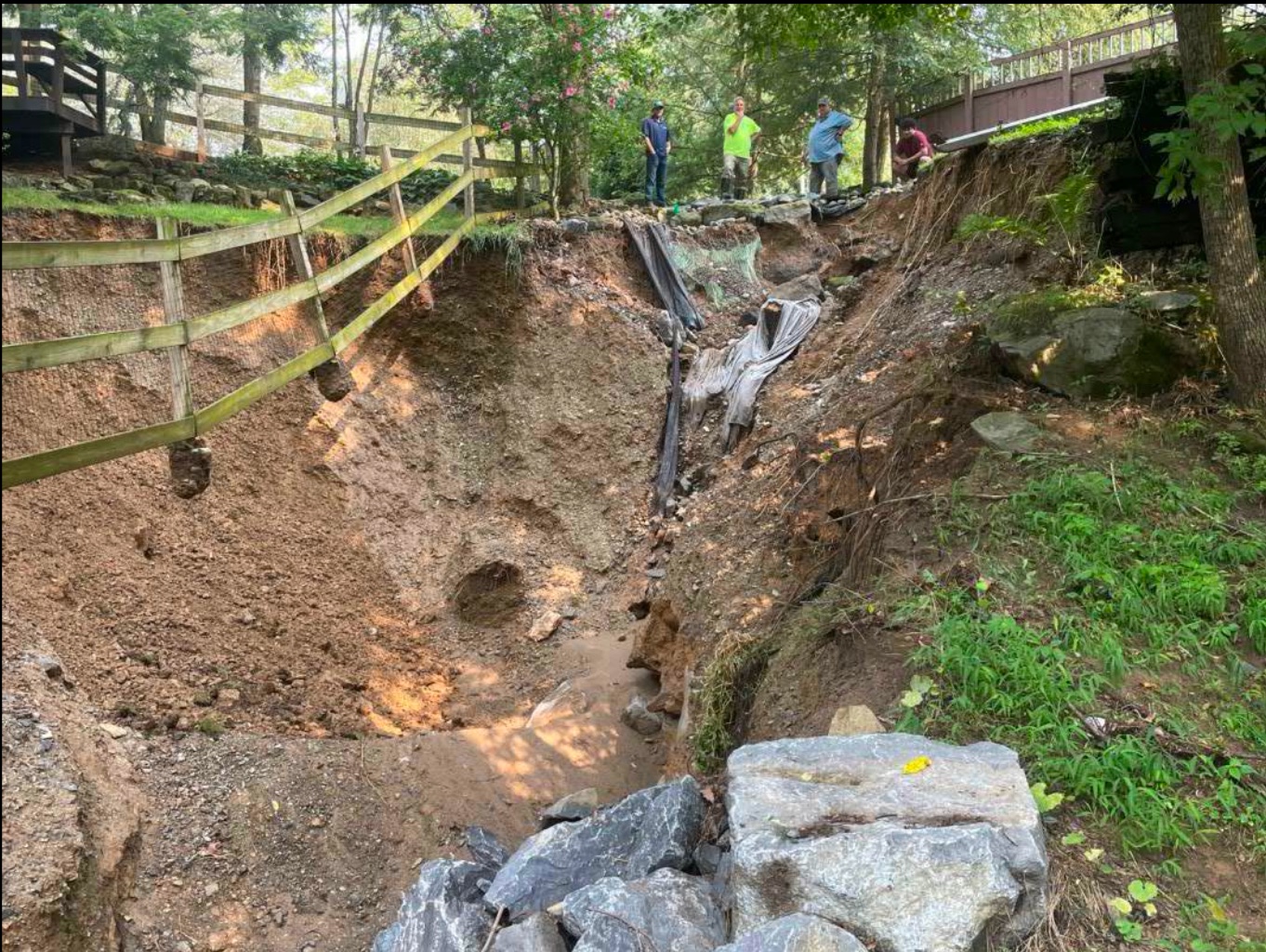
Williams, White, and the township’s public works director Scott Kistler immediately focused on ensuring the foundation of the two homes were stable. Once they did, they set out to survey the rest of the flood damage across the township, and it was significant.
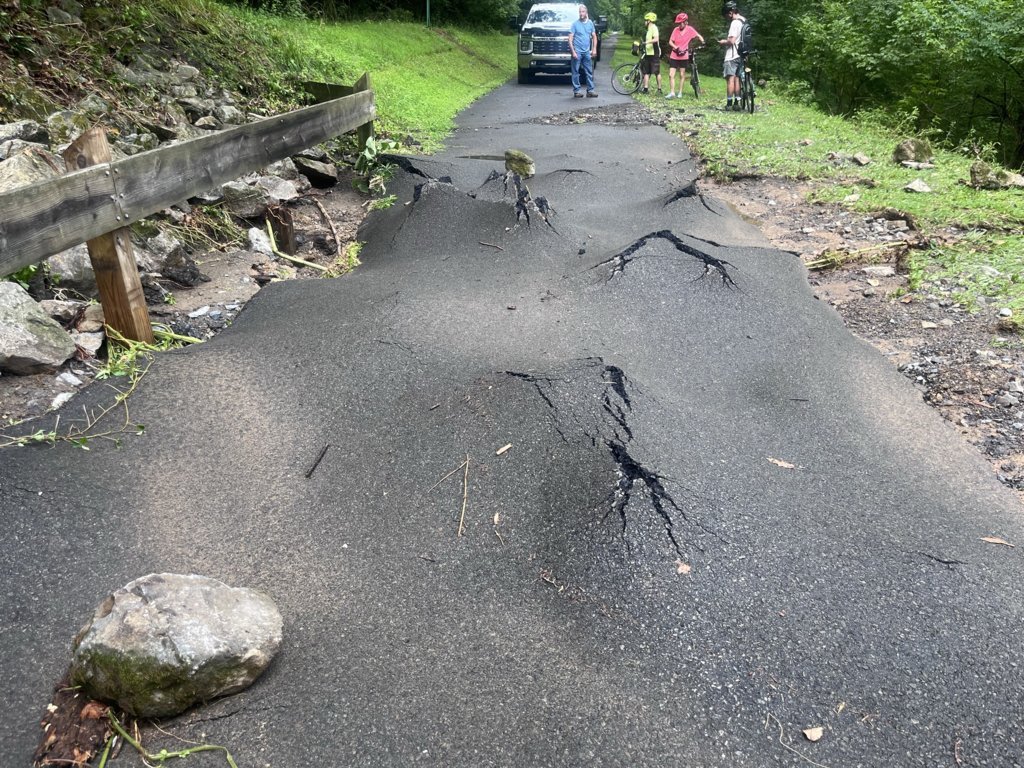
Floodwaters had continued south, depositing three feet of rock, soil, and debris on a nearby roadway before eroding another ditch approximately 15 feet deep and 125 feet long. A rush of stormwater over a bike path in Riverview Park had damaged approximately 100 feet of paved pathway, lifting and folding the asphalt. Schoeneck Creek had overtopped a culvert underneath Van Buren Road, causing significant damage and compromising its structural integrity. “There was a lot of residential damage in different areas of the township,” too, according to Williams. “We were out pretty much the entire day assessing the damage.”
The value of thorough documentation in the immediate aftermath of a storm
Williams and his team moved quickly on Sunday to document the storm damage, a smart move for any municipality responding to an extreme weather event. Municipal managers need to ensure infrastructure is safe after a storm subsides. Some roads may need to be closed until emergency repairs can be completed. Utility lines could be damaged; streambanks may be unstable. Geotagged photos, measurements, and timestamped records will help engineers develop repair plans and support any claims the municipality may make to their insurance company or federal and state agencies. These agencies can move fast in the aftermath of a storm.
FEMA officials met with the township within days of the storm to tour the damage, and Palmer Township was able to give them a detailed assessment from HRG’s engineers documenting the damage, outlining emergency repairs, and providing clear cost estimates. Ultimately, however, the agency did not provide funding to Palmer. Though Palmer had sustained significant damage from the storm, the damage across the rest of the county did not meet required thresholds for funding. Even in storms as severe as the one Palmer weathered, federal funding is not a certainty, so municipalities need to act now to ensure they will have the money to respond when disaster strikes.
The need to proactively fund and manage your stormwater system
The total cost of emergency repairs was more than $3.7 million. Municipalities don’t typically have this kind of money available in their reserves, nor do they typically have it budgeted for their stormwater program, as Williams can attest. “We didn’t have a specific line item in the budget for stormwater,” he said. “We had a line item for lost dogs, but not for stormwater.” Thankfully, they had recognized this need months before the storm had hit and were in the process of forming a stormwater authority to proactively manage their infrastructure. The township put the initial $3.7 million forward for the repairs, and the utility authority repaid the municipality after it began collecting revenue.
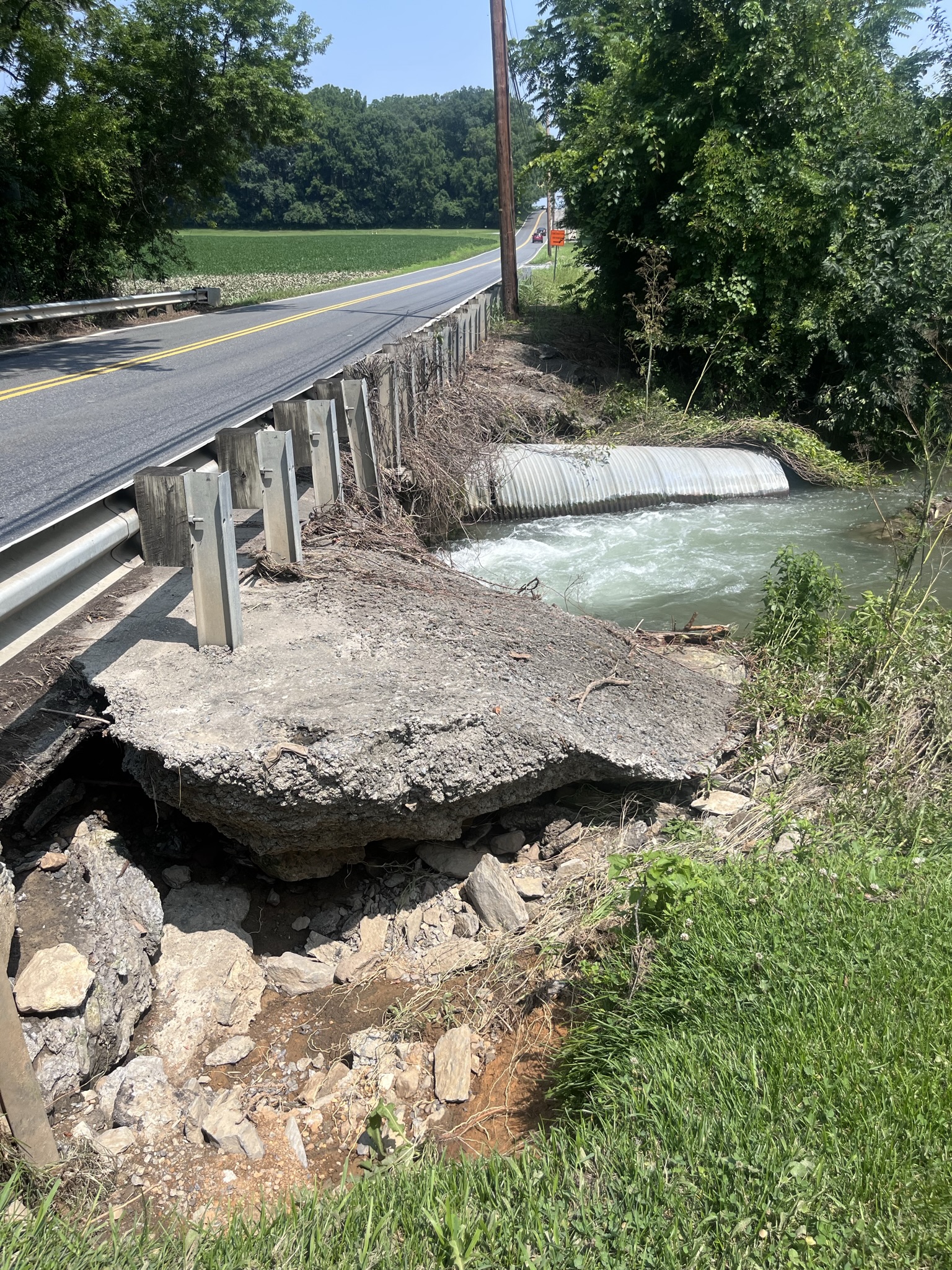
But the real value of the authority is proactive capital improvement planning. Before the authority, the township only addressed its stormwater system when it failed, like so many municipalities across the state. Now, using the dedicated revenue from a stormwater fee, the township has mapped its entire system and is prioritizing the infrastructure most in need of repair. Corrugated metal pipes – like the one that failed and opened up that massive crater three years ago – are at the top of the list. “Hopefully, we can prevent damage like this from happening next time a severe storm moves through Palmer,” White said.
This is Williams’ most earnest advice to fellow municipal managers: find an engineer with stormwater expertise you can trust and get your program together now. He’s thankful he had already started that process before the storm hit in 2023. “I didn’t know George a year earlier,” he said. If this storm would’ve happened then, “I wouldn’t have known who to call or where to find the money.” But when disaster struck, “George was there in 15-20 minutes. Within days, he and his team had a three-prong plan for emergency repairs, longer term rehabilitation measures for affected infrastructure, and community-wide capital improvement planning to proactively mitigate future flood risk.”
Williams served in the military and had assisted with disaster response with the Army National Guard, so he and his team at Palmer rehearsed and trained for extreme events routinely. He has a good relationship with the municipal fire commissioner and a close-knit emergency response team that also includes the police chief and assistant township manager. They knew how to respond to the storm in real time. Now they’re proactively working to mitigate future flood risk before the next big storm arrives.
Mapping infrastructure, conducting a condition assessment, and prioritizing capital improvements are smart steps every community should take. Investing in a hydraulic model can also help municipalities understand how stormwater flows through the community and mitigate potential flooding where the risk is highest. None of this is possible without proper funding, and a stormwater fee can be a valuable tool for municipalities with limited general revenue.
Setting up a fee takes time; Palmer spent almost a year setting up its stormwater authority, so municipalities should act now, Williams says. “I have two words for my fellow municipal managers: Do it. You will experience an extreme storm event; Mother Nature has a way of sprinkling that around. Find an engineering firm you can trust that has the expertise and a deep bench of talent to help you through times like this. Start getting your stormwater program in order proactively. These are long-term projects. It’s a 5,10-, and 20-year plan.”
Here is a checklist of recommendations to ensure your municipality is properly prepared for its flash flood risk:
Before Storm Season Arrives
- Maintain an inventory of flood-prone areas
- Inspect stormwater assets
- Verify emergency contacts
- Review road closure plans
- Practice emergency response procedures
When a Storm is Anticipated
- Monitor forecasts
- Clear critical inlets/culverts
- Stage equipment
- Notify departments
- Prepare public messaging
- Activate your emergency response team
- Begin field monitoring
- Pre-position barricades
- Coordinate with emergency services
- Issue public advisories
During the Storm
- Prioritize safety
- Close flooded roads early
- Monitor utilities/infrastructure
- Maintain communications
- Track damages in real time
After the Storm
- Conduct damage assessments
- Document thoroughly
- Identify hidden failures
- Restore access/utilities
- Perform an after-action review to identify potential improvements in response for next time.
- Update flood maps, emergency plans, and capital improvement priorities, as needed
Long-Term Resilience Measures
- Consider investments in upsizing storm sewers, replacing aging infrastructure, and floodplain reconnection.
- Evaluate your zoning and floodplain ordinances
Article from the June 2026 Municipal Reporter | Extreme Events